Loading...
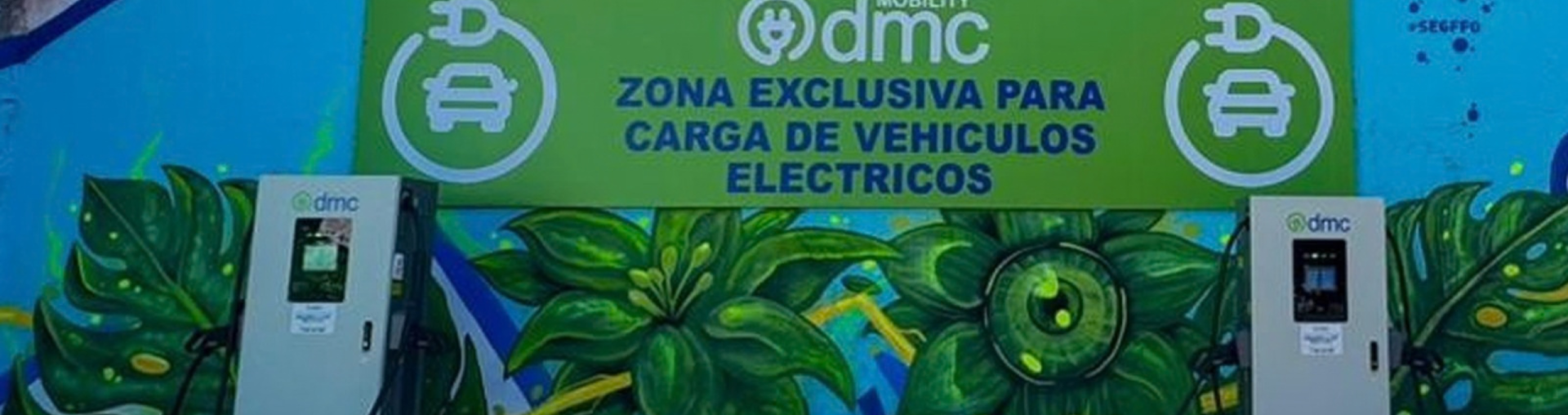
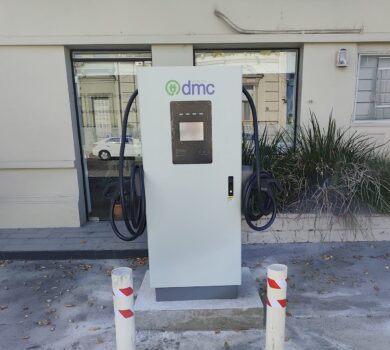
With 20 charging stations already installed and another 60 planned for the coming months, DMC Mobility is moving forward with the deployment of a network of 80 ultra-fast chargers. Its director, Alejandro Testa, shares his perspective on how the market is evolving and the lessons learned from the network’s development.
September 2026
For Testa, the availability of charging stations influences the decision to purchase electric vehicles
Electromobility is experiencing a period of strong growth in Uruguay. Between January and July 2026, 100% electric vehicles accounted for between 34% and 35% of new vehicle sales during that period. Various factors are driving this gradual transition toward the decarbonization of transportation, such as the decarbonization of the electricity generation mix, tax incentives, and other forms of financial support; however, one issue that is constantly at the center of public debate concerns the availability and distribution of charging infrastructure.
Six years ago, Alejandro Testa, director of DMC Mobility, identified the beginning of a trend toward the electrification of the vehicle fleet in Uruguay. “I saw what was happening here in Uruguay, which was different from what was happening in South America: much faster and on a larger scale.” He analyzed the data to confirm this and, from there, began searching for the right technology provider to carry out a project to install a charging network in Uruguay.
His search took him to China several times, where he visited various factories until he found what he considers to be the best charger option available for his project. In 2025, with funding from REIF-BROU, the project got underway.
DMC Mobility operates under a comprehensive solution model that encompasses the identification and assessment of charging sites, project planning, the necessary construction work, equipment installation, and subsequent operation.
As of September 2026, the company already has 20 chargers installed at various locations across the country. Another 20 will be installed soon, and 40 more are on the way, bringing the total in this first phase to 80 ultra-fast 120-kW chargers. In addition, DMC Mobility has its own app that allows users to locate charging stations on a map and check their status: whether they are available or occupied and, if a vehicle is charging, what percentage of battery charge it has. Charging stations are also listed on the UTE app, as a way to integrate the platforms and provide a better user experience.
According to the Ministry of Industry, Energy, and Mining (MIEM), there are currently more than 500 public charging stations in Uruguay, and the goal is to reach 600 by 2026 and 1,000 by 2027. Most of the charging stations are owned by UTE; however, mechanisms offering incentives have been developed to encourage the installation of chargers
public access by private developers. For the MIEM, electromobility is one of the pillars of the country’s second energy transition, and the development of a safe and mature charging infrastructure is one of the challenges of this new phase
When asked about the demand for chargers, Testa notes that Montevideo and Canelones are currently the areas with the highest volume of traffic. However, he emphasizes that DMC Mobility is committed to installing chargers throughout the country. For Testa, the availability of chargers drives the decision to purchase electric vehicles, so expanding the charging network helps generate its own demand.
In addition, it points out that having enough charging stations along a route makes trips that still raise doubts for those considering switching to an electric vehicle more feasible.
In that regard, the business executive believes that, unlike in other types of businesses, the coexistence of operators from different companies today does not lead to competition for the same users but simply creates more work.
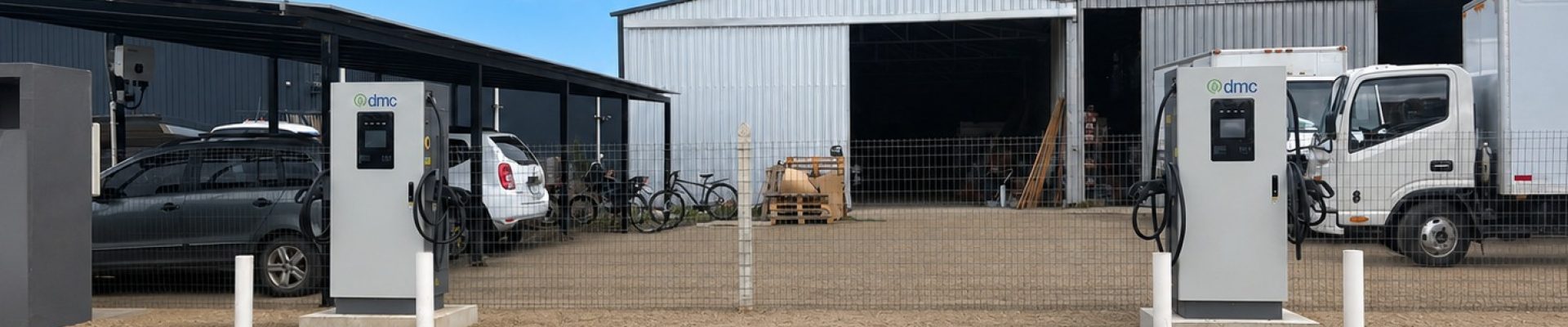
One of the main challenges for charging networks is ensuring that the necessary power is available at each location and coordinating installation schedules with any upgrades the power grid may require.
The director of DMC Mobility notes that, although there is availability at most locations, construction or adjustments to the distribution network may be necessary at some sites. “Electric cars arrived much faster than it takes for any distribution network to adapt to charging demand,” he said during the interview. This experience led the company to incorporate processing times and power capacity adjustments as key variables when planning each new installation.
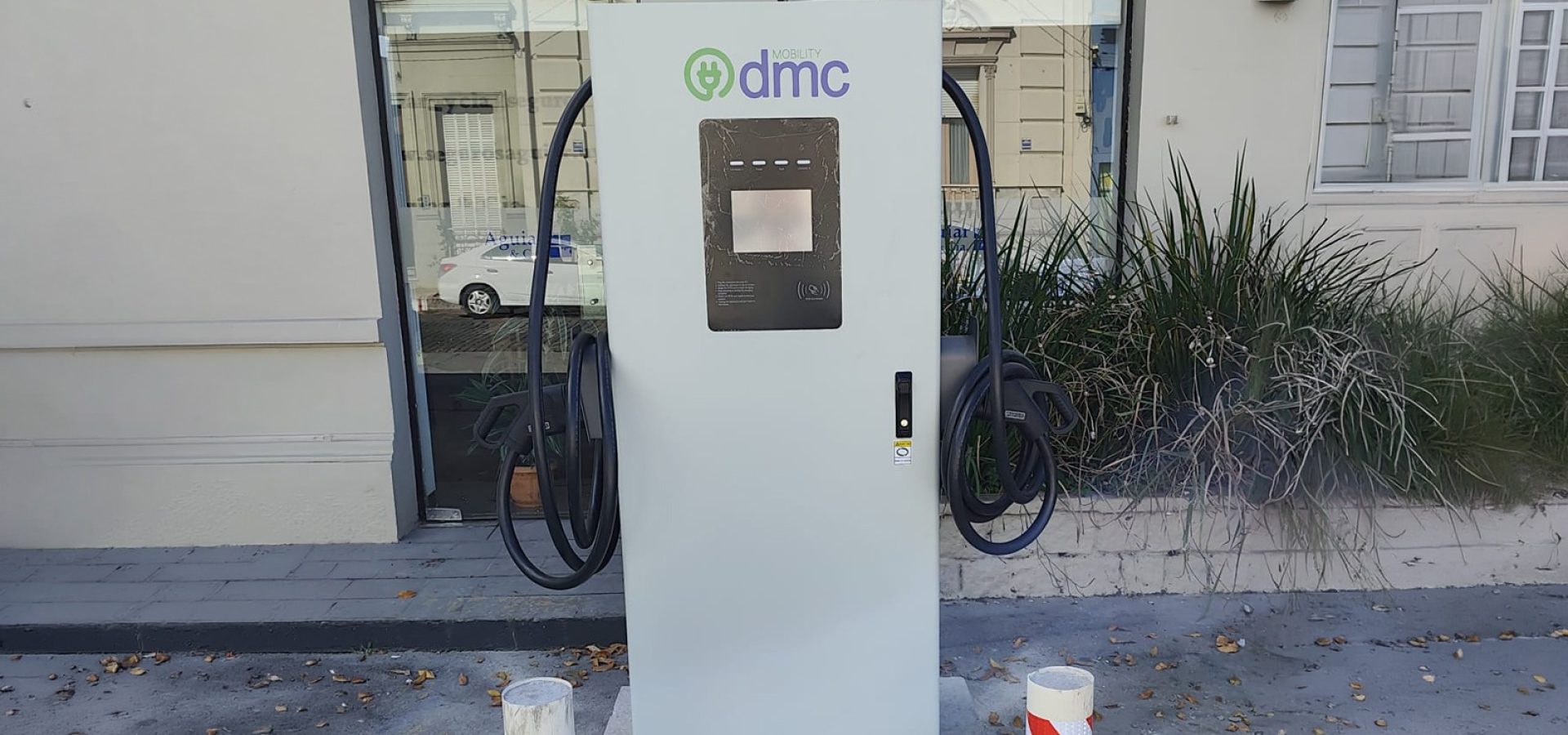
Added to this is another, more operational challenge: equipment security. After experiencing incidents of vandalism involving the charging hoses at some locations, DMC Mobility decided to prioritize installing chargers in publicly accessible areas, but within private or more closely monitored properties, avoiding locations that are directly exposed on public roads.
As part of the project, the company received technical assistance from REIF to work on impact measurement and the incorporation of a gender perspective into its management. DMC Mobility also adopted the Women’s Empowerment Principles (WEPs) as part of the process of strengthening its sustainability practices.
Testa particularly highlights the guidance and the relationship built during implementation. “Everything about the REIF—100 points,” he sums up when discussing the experience, noting that the support received was crucial to moving the project forward. (Learn more about the investment project here)
At the same time, DMC Mobility joined the United Nations Global Compact. According to its director, these types of commitments will become increasingly important for companies, particularly in their relationships with banks, investment funds, and other sources of financing. He believes that sustainability will play an increasingly significant role in the conditions for accessing capital and in business decisions.
Electric cars arrived much faster than any power grid could adapt to meet the demand for charging
Disclaimer: The views expressed in this article are those of the authors, based on their experience and previous research, and do not necessarily reflect the views of REIF (Renewable Energy Innovation Fund) or its partner institutions.
©2025 UN-REIF, All rights reserved.